Quest Medals: What to Buy in the Medal Event
Six equipment pieces are in the shop and five of them are already in the Hero Journey pool. Here is why that makes the choice much simpler than it looks.
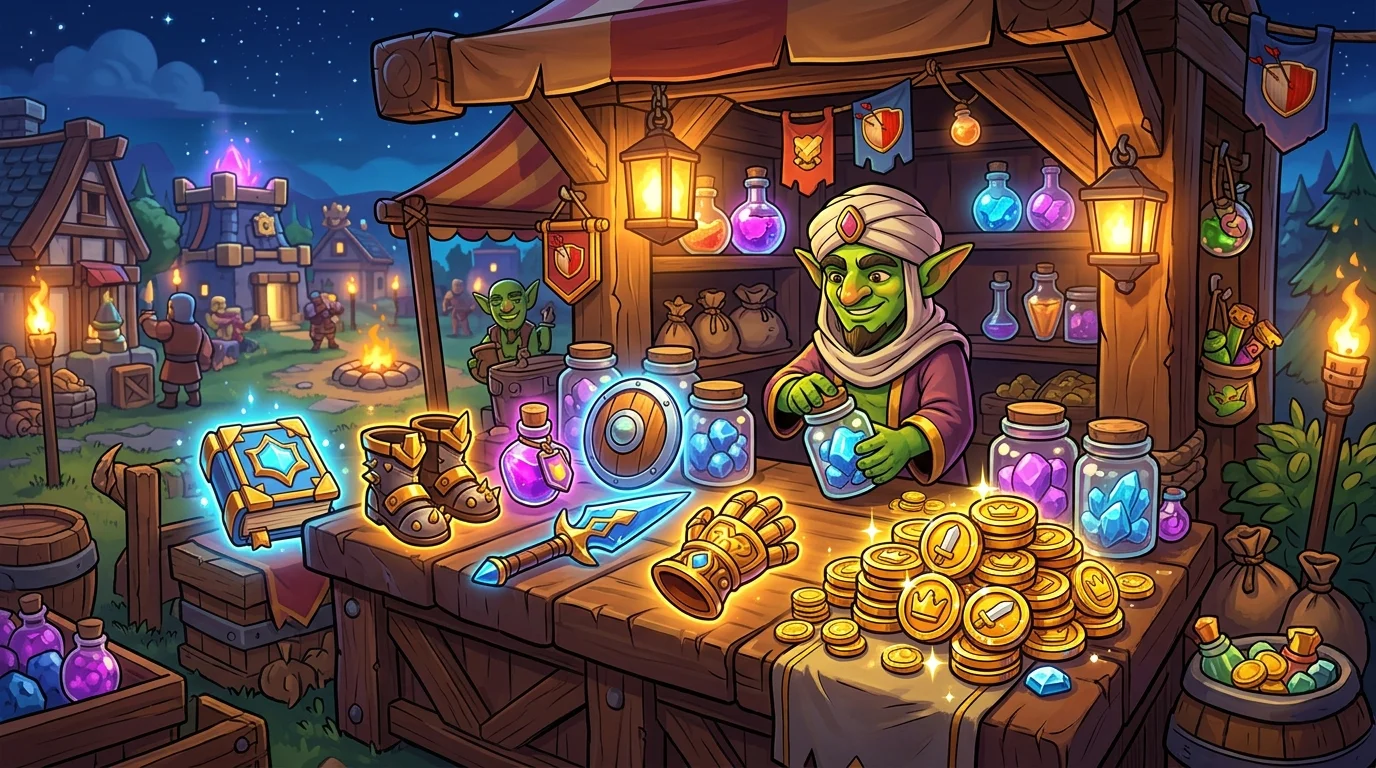
Quick Answer
Quick answer: Free to play players finish with 3,300 quest medals, and the shop sells six equipment pieces: the new Revenge Deck plus five returning ones, the Electro Boots, Magic Mirror, Dark Crown, Heroic Torch and Spiky Ball. Buy the Revenge Deck. Not because it's the strongest, but because the other five are already sitting in the Hero Journey equipment pool and you'll get them there for nothing.
That's the whole logic. The Hero Journey hands out equipment briefcases, three for the King, two each for the Queen, Warden, Prince and Champion, and one for the Dragon Duke. If you already own everything in a hero's journey pool when a briefcase opens, you get a handful of starry ore instead of equipment. So buying a returning piece now can quietly convert a future free equipment into a small pile of ore.
If you'd rather skip equipment entirely, eight packs of starry ore and two of gloomy ore is the sensible alternative, because starry ore is what epic equipment upgrades consume and it's the hardest of the three to accumulate.
The Hero Journey Overlap Nobody Mentions
This is the single most valuable thing to understand before spending a medal, and it isn't explained anywhere in the shop itself.
Hero Journey briefcases pull from a pool of equipment for each hero. The King gets three briefcases, the Queen, Warden, Prince and Champion get two each, and the Dragon Duke gets one. Each briefcase gives you a piece you don't already own from that hero's pool.
Here's the trap. If you own everything in the pool by the time a briefcase opens, there's nothing left for it to give you, so it pays out starry ore instead. A free epic equipment turns into a consolation prize because you bought that same piece with medals a month earlier.
Five of the six pieces in this month's shop are in those journey pools. The Revenge Deck, being brand new, is not. Buying it therefore costs you nothing in future value, while buying the Electro Boots or the Spiky Ball might.
One genuine exception exists. Each hero's journey pool holds one more piece than the number of briefcases they get, so owning nothing for a hero means you won't exhaust the pool and can safely buy a returning piece. Even then it's worth caution, because a legendary chest can hand you that extra piece unexpectedly and put you right back into the overlap.
Practical way to check before you buy: open the Hero Journey, look at the pool for the hero whose equipment you're eyeing, and count how many pieces in it you already own against how many briefcases that hero still has coming. If owning one more would fill the pool, that purchase is costing you a free piece later.
The Dragon Duke is the tightest case of all, since one briefcase against a pool of two means a single purchase can exhaust it. That's another reason the Revenge Deck sits outside this problem, because a brand new piece isn't in the pool at all and cannot collide with it.
For which heroes to prioritise across the journey itself, our hero journey guide covers the ordering.
What the Revenge Deck Actually Does
Worth knowing what you're buying rather than buying it purely on the overlap argument.
It's an epic equipment for the Dragon Duke. When defences attack him, it sends counters back at them, each dealing a set amount of damage to a building and healing the Dragon Duke for every counter that lands.
So it's a defensive and offensive piece at once, and its value scales with how much fire the Duke is taking. Against a village with defences packed close together, more things are shooting him, which means more counters and more healing. Against a spread out base it does considerably less.
That makes it a different kind of equipment from the usual damage boosters, and it pairs oddly with playstyles that keep the Duke away from concentrated fire. I'd want to test it properly before rebuilding an army around it, and the two magic snacks from the event track are exactly the right way to do that without committing ore.
Our Dragon Duke equipment guide covers how the existing options compare, which matters because the Duke only gets one journey briefcase and so has the tightest equipment budget of any hero.
The Ore Alternative, and When It Wins
Equipment you can't upgrade is a statue, so there's a real argument for skipping the shiny new thing and buying the resource that unblocks what you already own.
Eight packs of starry ore plus two packs of gloomy ore is the standard ore split at the free to play medal budget. Starry ore is the bottleneck for epic equipment, gloomy ore for common and rare pieces past the middle levels.
Ore packs also carry no risk of overlap. Nothing in the Hero Journey pays out an ore pack you might otherwise have bought, so unlike equipment there's no future value being quietly spent when you buy them. For a cautious player who doesn't want to audit journey pools at all, ore is the choice that cannot be wrong.
Choose this if you already hold two or three epic pieces sitting at levels you can't push. An extra piece of equipment at level one does less for your attacks than taking an existing epic two levels higher, and that's true almost regardless of which piece it is.
Shiny ore is not the constraint for most players, which is why the 500,000 on the free track sounds more generous than it plays. It gets consumed quickly by common equipment and it's the easiest of the three to earn elsewhere.
There's a middle path worth considering: buy the Revenge Deck first, then hold the remaining medals rather than spending them immediately. If bonus medals appear mid event, and they have in previous runs, you can convert the total into an ore pack. Spending everything on day one removes that option for no benefit, since the shop stays open past the event.
Decorations and the Things That Are Not Rewards
The shop carries cosmetics alongside the useful items, and it's worth being honest about where they sit.
The Card Flipper is this event's super decoration, and it cycles through the hero skins available this month so you can display whichever you prefer. It's genuinely one of the better decorations Supercell has made, and it's still a decoration.
Everyone gets the awesome orb for free at the end of the track, animated and interactive, so you aren't cosmetically empty handed either way. That reduces the case for spending medals on a second one.
Clan house decorations show up too, and they're the purest collector purchase in the shop. Nothing wrong with that if collecting is why you play, and I'd rather someone spend medals on something they'll enjoy looking at than on an equipment piece they were going to receive free anyway.
Hero skins are the other cosmetic worth a word. They rotate monthly and the Card Flipper's whole purpose is showing off whichever one you like, so the decoration is only really worth medals if you own skins to display. Buying the flipper with an empty skin collection is paying for a frame with no picture in it.
The one thing I'd avoid is buying a decoration and then finding yourself 300 medals short of the starry ore pack that would have finished an upgrade. Price the useful items first, see what's left, then decide on cosmetics with the remainder.
Is the Event Pass Worth It
Purely on numbers, the pass track alone returns 600 gloomy ore and 80 starry ore, before you touch the 5,500 extra quest medals it adds to your shop budget.
Those extra medals change what's reachable. At 8,800 total you're no longer choosing between equipment and ore, you can take the new equipment and several ore packs, or multiple equipment pieces if the journey overlap allows it.
A useful benchmark for books: a book of heroes costs 500 gems in the regular shop, so a pass that delivers books for the equivalent of a few dollars is good value on that comparison alone. Books skip upgrade timers, which is the resource nobody can farm.
Against the Gold Pass, it comes down to what you're short of. Gold Pass helps steady progression through builder time and upgrade discounts, while the event pass is a burst of ore and equipment. Players stuck on hero equipment levels get more from the event pass, players stuck on building upgrades get more from the Gold Pass.
One caution on the pass maths. The value calculation only holds if you actually finish the track, and the pass does not reduce the 16,000 card tokens required. Buying a pass and then attacking twice a week leaves most of that ore unclaimed, which turns good value into wasted money. Decide whether you'll play the nineteen days first, then decide on the pass.
Neither is needed to finish the event. The free track's 3,300 medals buys the new equipment outright, which is the decision that actually matters, and everything past that is acceleration. For anything that changes mid month, the official Clash of Clans site is the authoritative source, since shop contents and bonus medal experiments have both shifted mid event before.
Frequently Asked Questions
What should free to play players buy with quest medals?
The Revenge Deck, because it is the only piece in the shop that is not already in the Hero Journey equipment pool. Buying a returning piece can turn a future free briefcase into a small amount of starry ore instead of equipment.
How many quest medals do free to play players get?
3,100 from the main track plus 200 from the bonus track, so 3,300 in total. Buying the event pass adds another 5,500 on top of that.
Why does buying old equipment waste Hero Journey rewards?
Briefcases only give equipment you do not already own from that hero's pool. Own everything and the briefcase pays out starry ore instead, so purchasing a pool piece now can downgrade a free reward later.
Should I buy ore instead of equipment?
Yes if you already hold epic equipment you cannot upgrade. Eight packs of starry ore and two of gloomy ore is the usual split, and levelling an existing epic beats adding a new piece at level one.
Is the Awesome Medal Event pass worth buying?
The track alone gives 600 gloomy ore and 80 starry ore plus 5,500 extra medals, which is strong value if hero equipment is your bottleneck. Our medal event guide covers the rest of the track.
What does the Revenge Deck do?
It is epic equipment for the Dragon Duke that sends counters at defences attacking him, damaging buildings and healing the Duke for each counter. Its value scales with how much fire he takes, so it performs better against compact bases.